
When Conservation Works but Livelihoods Fail
A Systems View of Power, Access, and Value
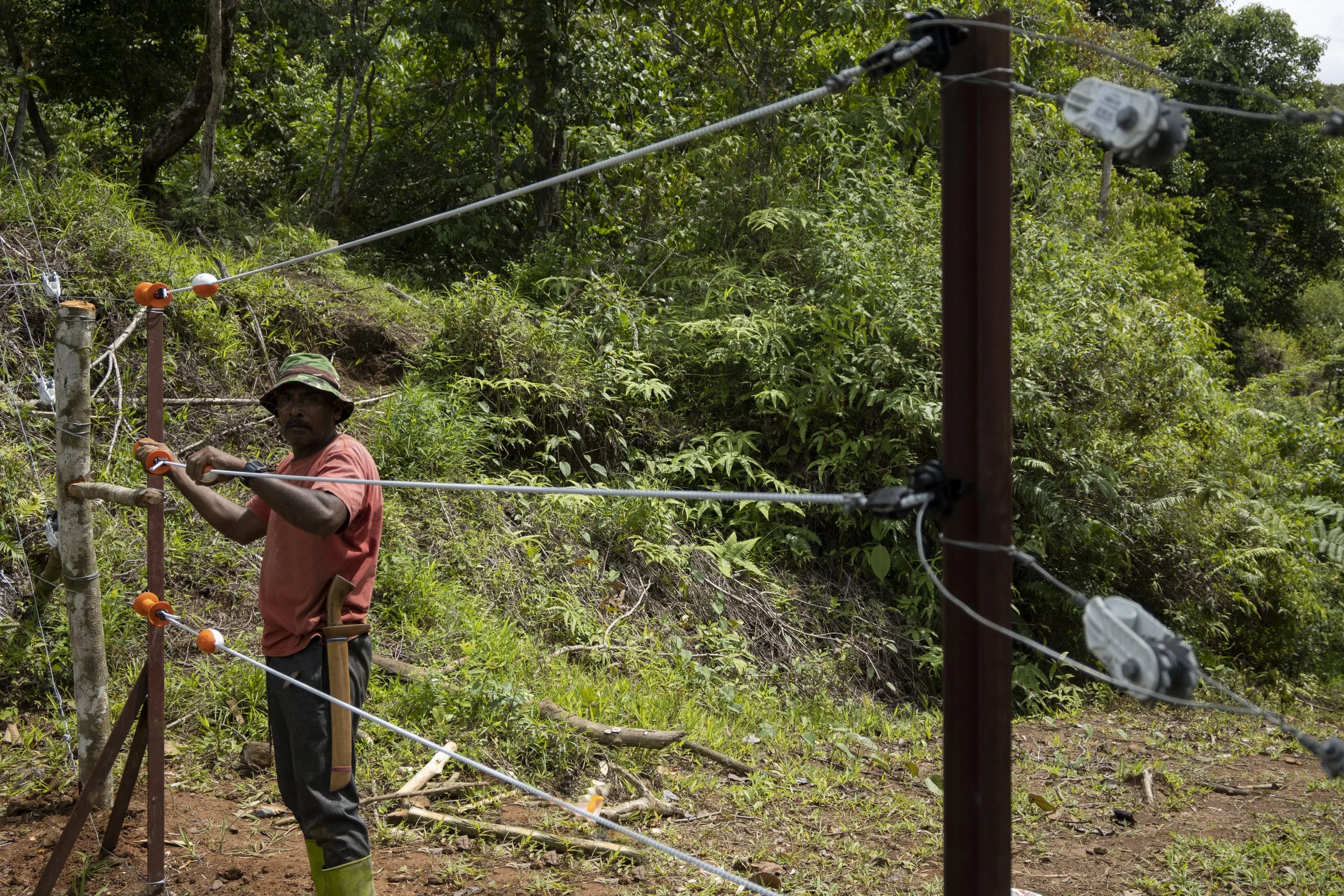
Figure 1. Conservation systems can achieve ecological protection while simultaneously generating uneven livelihood outcomes, institutional tension, and long-term structural instability across dependent communities. Photo credit: Teuku Boyhaqie / iStock
Environmental systems are frequently evaluated through their most visible outcomes: protected landscapes, biodiversity recovery, tourism growth, and institutional compliance. These indicators are often treated as evidence of successful conservation governance. Yet beneath many of these successes lies a less visible reality: communities living closest to protected resources frequently continue to experience livelihood insecurity, restricted access, economic vulnerability, and structural exclusion.
This coexistence of ecological success and social strain is commonly interpreted as an unfortunate trade-off between conservation and development. In reality, it reflects something deeper: the architecture of the system itself.
Conventional environmental governance frameworks tend to analyse conservation, governance, and livelihoods as separate domains. Conservation is assessed through ecological indicators. Governance is evaluated through institutional effectiveness and enforcement capacity. Livelihood outcomes are explained through employment, adaptation, or individual behaviour. When tensions emerge, they are often framed as implementation failures, weak compliance, or local resistance.
Such interpretations focus on symptoms rather than structure.
They assume that environmental tensions emerge primarily from human response, when in many cases they are produced by how systems distribute control, access, value, and survival conditions from the outset.
Conservation Success Does Not Always Produce Human Stability
Environmental systems do not operate through ecology alone. They operate through institutional governance, access regimes, economic distribution systems, and survival pressures that shape how people interact with resources over time.
A protected forest, for example, is never simply an ecological space. It is simultaneously:
a governance territory,
a value-generating asset,
a regulated access environment,
and a livelihood system.
The way these dimensions are organised determines whether environmental systems generate stability or structural tension.
In many conservation contexts, governance structures prioritise ecological protection while underestimating the survival realities of populations that depend on the same resources. Access restrictions may expand faster than alternative livelihood systems. Economic value generated through conservation may concentrate institutionally while local populations absorb the costs of transition. Participation may exist formally while influence over value and decision-making remains limited.
Under these conditions, environmental systems can succeed ecologically while failing socially.
The issue is therefore not whether conservation works.
The issue is:
For whom, through which structures, and under what distribution of power and value does it work?
The Hidden Contradiction Inside Environmental Governance
Many environmental governance models focus heavily on visible outcomes while leaving the underlying structural relationships insufficiently examined.
Biodiversity indicators may improve. Tourism investment may expand. Enforcement systems may become stronger. Yet livelihood insecurity, informal extraction, conflict, and distrust of governance can continue simultaneously.
This contradiction often appears confusing because conservation success and livelihood instability are treated as unrelated phenomena.
They are not. They emerge from the same system.
Environmental systems organise:
authority,
resource control,
access conditions,
benefit distribution,
and survival possibilities.
When these elements become structurally misaligned, tension is produced internally by the system itself.
What later appears as:
illegal activity,
resistance,
non-compliance,
or governance instability
may actually represent responses generated by structural pressure systems already embedded within the governance architecture.
This requires moving beyond fragmented policy analysis toward a systems-thinking framework that understands how ecological governance and livelihood systems interact dynamically across institutions, communities, and over time.
Why Existing Conservation Models Remain Incomplete
Many existing conservation frameworks remain analytically fragmented.
Some focus primarily on biodiversity protection. Others prioritise governance efficiency, participation, or economic sustainability. Development frameworks often address livelihoods separately from ecological governance structures. As a result, the system connecting these dimensions frequently remains underdeveloped.
This fragmentation limits institutional understanding.
It explains outcomes in parts while leaving the structural relationships between:
power,
access,
value,
and survival
insufficiently integrated into a coherent governance architecture.
The problem is not necessarily the absence of data or expertise.
It is the absence of structural synthesis.
Without integrated systems analysis, environmental governance risks treating visible tensions as isolated problems instead of understanding how they emerge from interconnected institutional arrangements.
This is particularly important in contexts where:
ecological protection,
livelihood dependence,
state authority,
tourism economies,
and development agendas
intersect within the same territorial system.
Beyond Ecological Metrics
Ecological indicators alone cannot fully explain whether environmental systems are structurally sustainable.
A conservation model may successfully protect biodiversity while simultaneously:
weakening local livelihood resilience,
concentrating authority,
restricting economic mobility,
or generating dependency without integration.
Under these conditions, ecological success can coexist with social instability.
Over time, this weakens governance legitimacy itself.
Communities may formally comply while remaining structurally excluded from meaningful value distribution. Informal systems may emerge alongside formal governance systems. Enforcement pressure may increase while long-term institutional trust declines.
The issue is not simply conservation effectiveness.
It is systemic alignment.
Sustainable systems require ecological protection, governance legitimacy, and livelihood viability to reinforce rather than undermine one another.
The Power–Resource–Livelihood System
To make these structural dynamics visible, Cognitra Group developed the Power–Resource–Livelihood System framework.
The framework approaches environmental governance not as a collection of isolated interventions but as an interconnected system through which:
resources,
authority,
access,
value,
and survival
They are continuously organised and redistributed.
The model identifies six interconnected structural layers:
Resource Base
Governance Authority
Access Regime
Value Capture System
Livelihood Condition
System Response
Each layer conditions the next.
Together, they determine how environmental systems produce both ecological and social outcomes.
Rather than analysing conservation only through outcomes, the framework examines the architecture generating those outcomes.
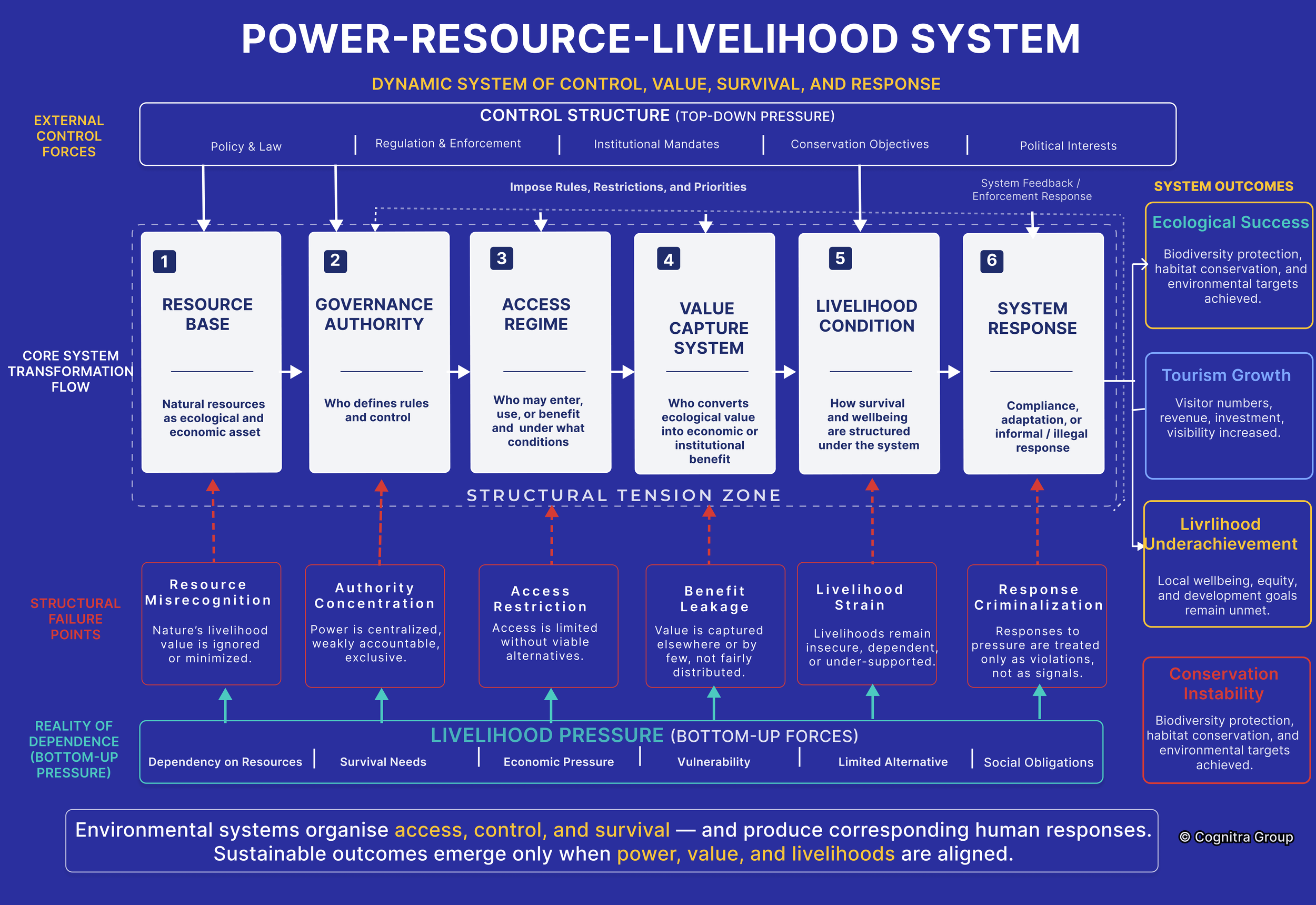
Figure 2. The Power–Resource–Livelihood System Framework. A systems governance framework developed by Cognitra Group to explain how power structures, resource control systems, access regimes, value distribution, and livelihood pressures interact to produce environmental, institutional, and social outcomes.
Structural Failure Points
Between institutional design and lived reality lies what can be described as a structural tension zone. Within this zone, recurring forms of imbalance emerge across environmental governance systems.
These are not isolated failures. They are patterned structural conditions.
Resource Misrecognition
Natural resources are frequently valued primarily through ecological protection or economic extraction, while their livelihood function is minimised or overlooked. Communities dependent on those systems become visible mainly as governance subjects rather than as structural stakeholders within the environmental system itself.
Authority Concentration
Governance authority may become centralised within institutions that remain geographically, politically, or economically distant from affected populations. Decision-making power concentrates upward while local influence over system priorities remains limited.
Access Restriction
Access regimes often regulate who may enter, use, or benefit from environmental resources. When restrictions expand without viable alternatives, communities can experience increasing dependence alongside declining economic resilience.
Benefit Leakage
Environmental value generated through tourism, conservation financing, or institutional investment does not automatically circulate locally. In many systems, value is captured externally while local populations absorb the social and economic costs of conservation transition.
Livelihood Strain
When livelihood systems remain insecure, survival pressures intensify. Dependency deepens, alternatives narrow, and vulnerability expands across households and communities operating within constrained access environments.
Response Criminalization
Responses generated under structural pressure are frequently interpreted only as violations requiring enforcement. Yet many informal or illegal activities are also signals of unresolved system tension, institutional imbalance, and exclusion from viable survival pathways.
When Systems Ignore Livelihood Realities
Environmental governance systems become unstable when livelihood realities are treated as secondary variables rather than foundational structural conditions.
People do not interact with governance systems abstractly.
They interact through:
survival,
dependency,
obligation,
risk,
and opportunity.
Where livelihood systems remain weak, environmental governance increasingly depends on enforcement rather than legitimacy. Compliance becomes conditional and fragile. Informal adaptation systems expand beneath formal institutional structures.
This is not simply a behavioural issue.
It is a systems issue.
Governance systems that fail to integrate livelihood realities into their operational architecture often reproduce the very tensions they seek to eliminate.
Compliance, Resistance, and Survival
Under structural pressure, human responses frequently become adaptive rather than oppositional.
Communities may:
negotiate informal access,
rely on parallel economic systems,
reinterpret regulations,
or develop alternative survival pathways.
These responses are often treated exclusively through criminal or enforcement frameworks. Yet systems analysis suggests something different. Responses emerge from conditions.
Where power, value, and survival remain misaligned, environmental systems continuously regenerate pressure regardless of enforcement intensity.
Long-term sustainability, therefore, depends less on control expansion and more on structural coherence between governance objectives and lived realities.
Toward Integrated Environmental Governance
Addressing environmental instability requires more than stronger enforcement mechanisms or isolated development interventions.
It requires structural redesign.
Integrated environmental governance depends on aligning:
ecological objectives,
institutional authority,
access structures,
value distribution,
and livelihood systems
within the same operational framework.
This means moving beyond fragmented governance models toward systems capable of coordinating environmental sustainability with social durability.
The central question is no longer simply:
“How do we protect resources?”
But rather:
“How do we structure environmental systems so ecological sustainability and livelihood stability become mutually reinforcing conditions?”
Sustainable Systems Require Structural Alignment
Environmental systems do not fail only because resources decline.
They also fail when legitimacy weakens, livelihoods destabilise, and governance structures lose social coherence.
Sustainable outcomes emerge when:
authority remains accountable,
access remains viable,
value remains distributive,
and survival systems remain integrated into governance design.
Structural alignment is therefore not a secondary governance concern.
It is the foundation upon which long-term environmental sustainability depends.
Conclusion
Conservation outcomes cannot be understood fully through ecological indicators alone.
Environmental systems simultaneously organise:
protection,
authority,
value,
access,
and survival.
Where these dimensions become structurally disconnected, ecological success may coexist with livelihood instability, governance tension, and long-term institutional fragility.
The challenge is therefore not only to improve conservation practices.
It is to understand and redesign the systems through which conservation operates.
This requires a shift from fragmented analysis toward structural systems thinking; one capable of explaining not only environmental outcomes, but the governance architectures producing them.
Environmental sustainability is ultimately not just an ecological objective.
It is a systemic condition shaped by how power, resources, value, and livelihoods are organised across society.
Continue Exploring Cognitra Group Essays
Explore other Cognitra Group essays examining how institutions, systems, power, knowledge and social change interact across different contexts.
What Becomes Scarce Next?
How Transformations Change What Matters, Who Can Convert It — and Who Controls the Next Gate
→ Read the essay
When Education Survives but Relevance Declines — Second Edition
Why Institutional Continuity Does Not Guarantee Social Alignment
→ Read the essay
When Education Survives but Relevance Declines
Why Institutional Continuity Does Not Guarantee Social Alignment
→ Read the essay
Migration Does Not End at Arrival
→ Read the essay